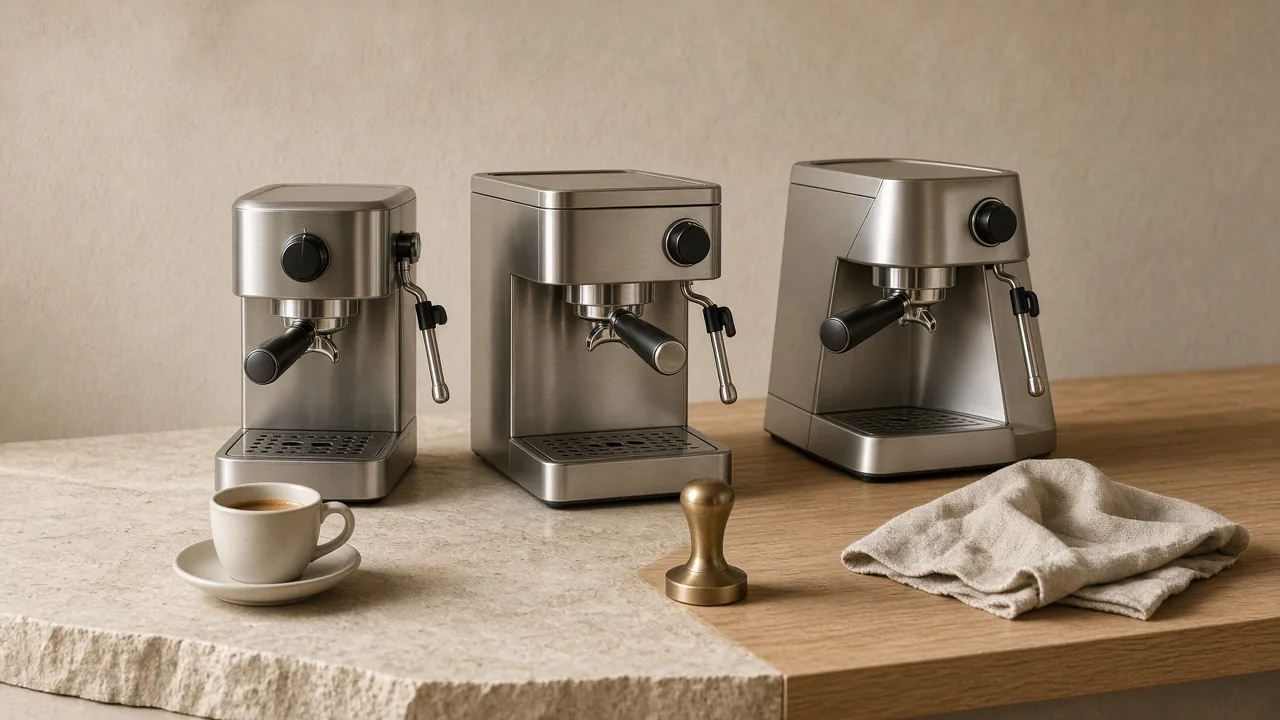
Quick picks
These are example recommendations for the first published version, drawn from a research-based draft—not from a scored lab test we have already completed.
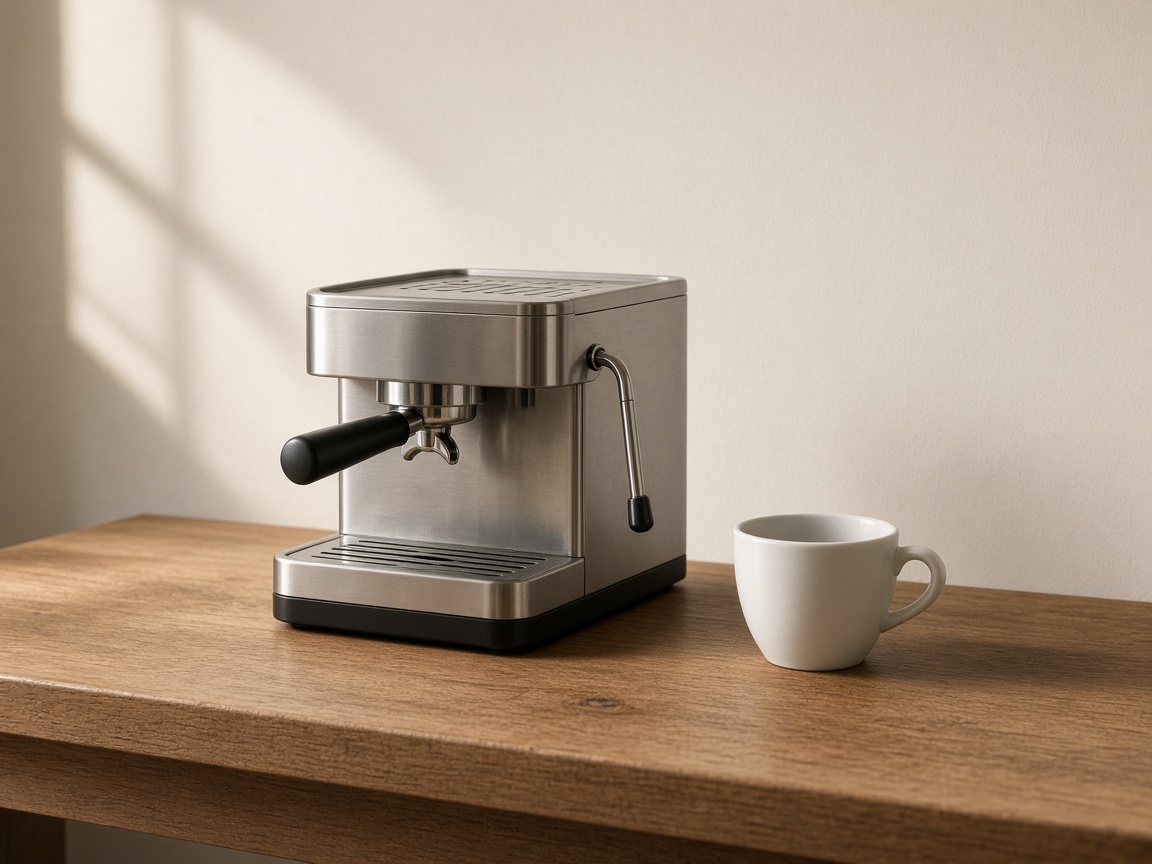
Breville Bambino Plus
Fast heat-up, PID temperature control, and an automatic steam wand. Around $400–$500.
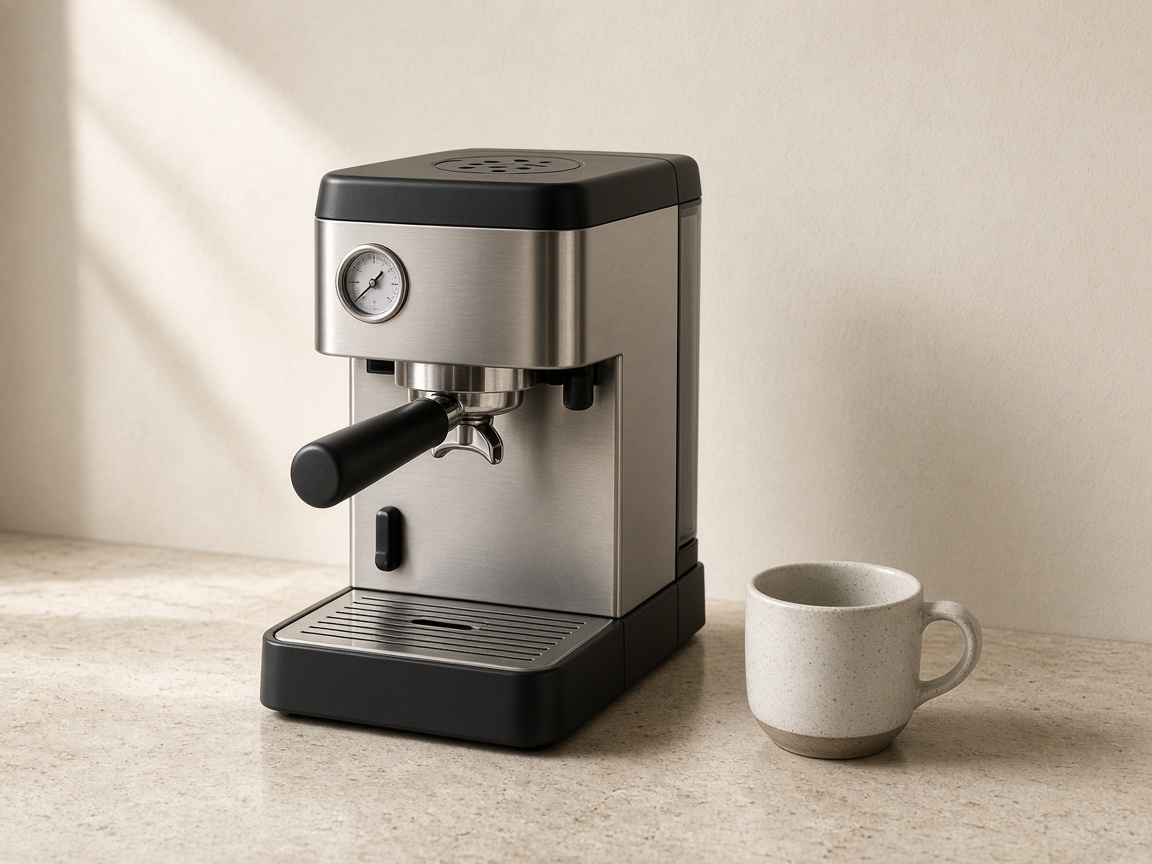
Casabrews CM5418
A 5.9-inch-wide machine with a pressure gauge and PID, around $140–$170.
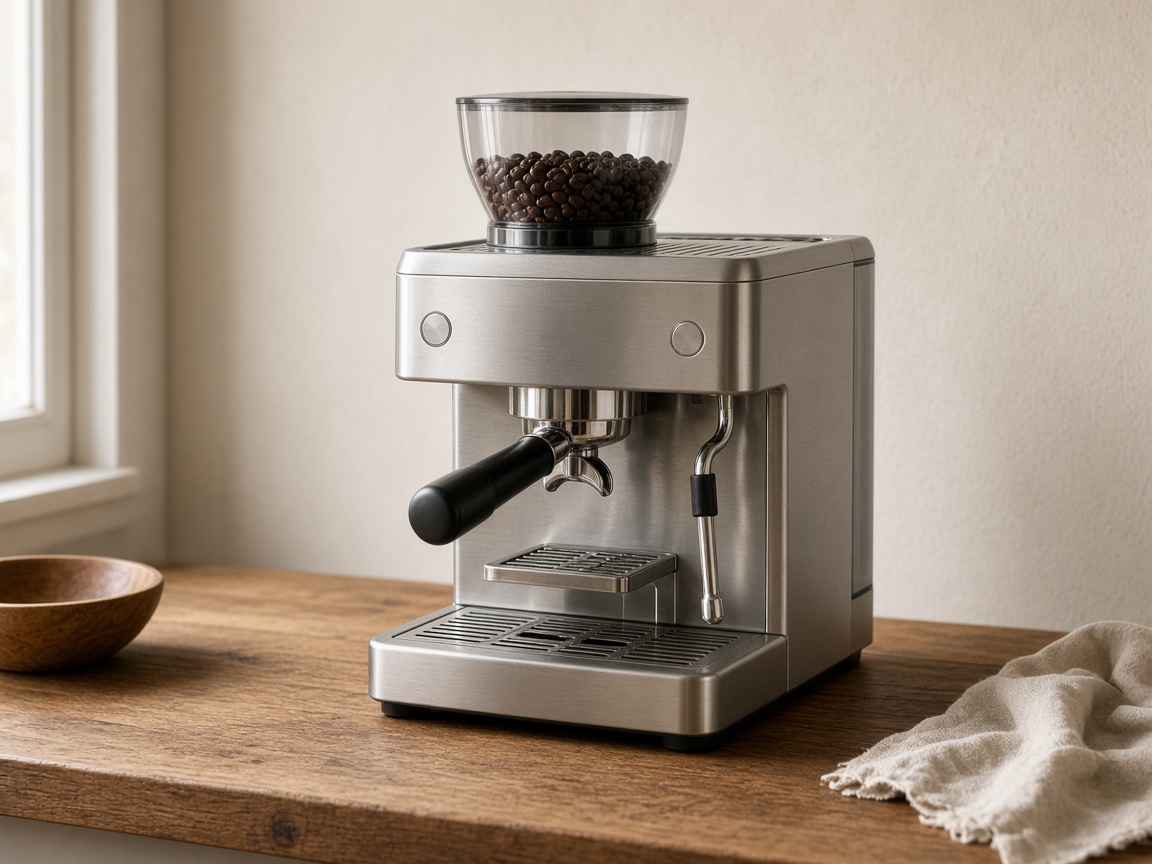
Breville Bambino Plus
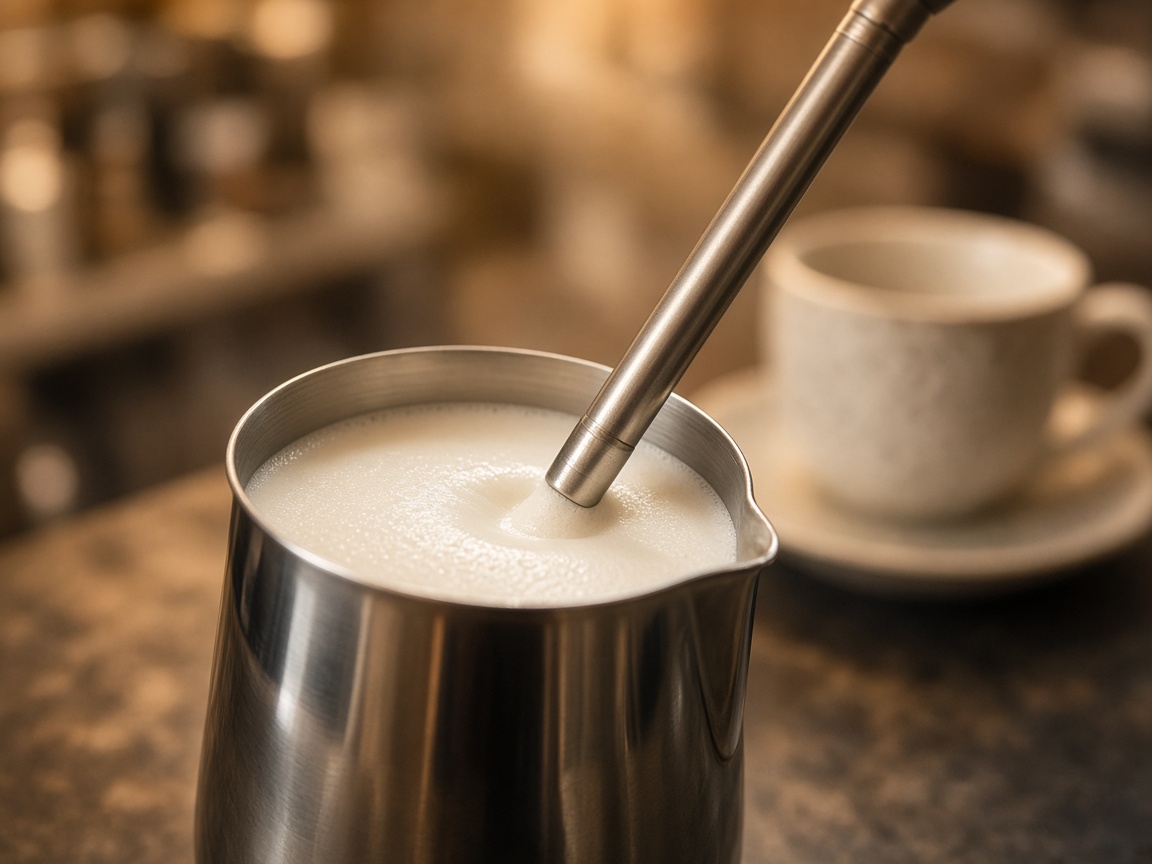
The automatic steam wand is the easiest on-ramp for milk drinks.
Quick comparison
Approximate US prices from listings checked in November 2026. Click through before you buy; sales move these numbers.
Swipe the table sideways to see steam wand, portafilter, and price.
| Machine | Best for | Heating | Built-in grinder | Steam wand | Portafilter | Approx. price |
|---|---|---|---|---|---|---|
| Breville Bambino Plus | Most beginners, milk drinks | ThermoJet + PID | No | Automatic or manual | 54 mm | ~$400–$500 |
| Breville Barista Express | All-in-one starter | Thermocoil + PID | Yes | Manual | 54 mm | ~$500–$700 |
| Gaggia Classic Pro E24 | Learning “real” espresso | Single brass boiler | No | Manual, commercial style | 58 mm | ~$460–$550 |
| Casabrews CM5418 | Budget + small spaces | Thermoblock + PID | No | Manual | 51 mm | ~$140–$170 |
| De’Longhi Stilosa | Lowest cost of entry | Stainless steel boiler | No | Manual frother | Not listed | ~$150 |
| Breville Barista Pro | Upgrade, speed + grinder | ThermoJet + PID | Yes | Manual | 54 mm | ~$850 |
Check current prices on Amazon
Affiliate link placeholder: add your Amazon Associates URL here and keep rel=”sponsored”. Do not publish a guessed tag.
How we chose
We have not yet put these machines through our own side-by-side testing, and we want that to be obvious. This is a research-based buyer’s guide. We started with machines sold new in the US, checked specs on manufacturer and major-retailer pages, read independent reviews, and weighted ease of use, milk steaming, size, and total setup cost—including a grinder—more heavily than pro-level features.
Captions / transcript
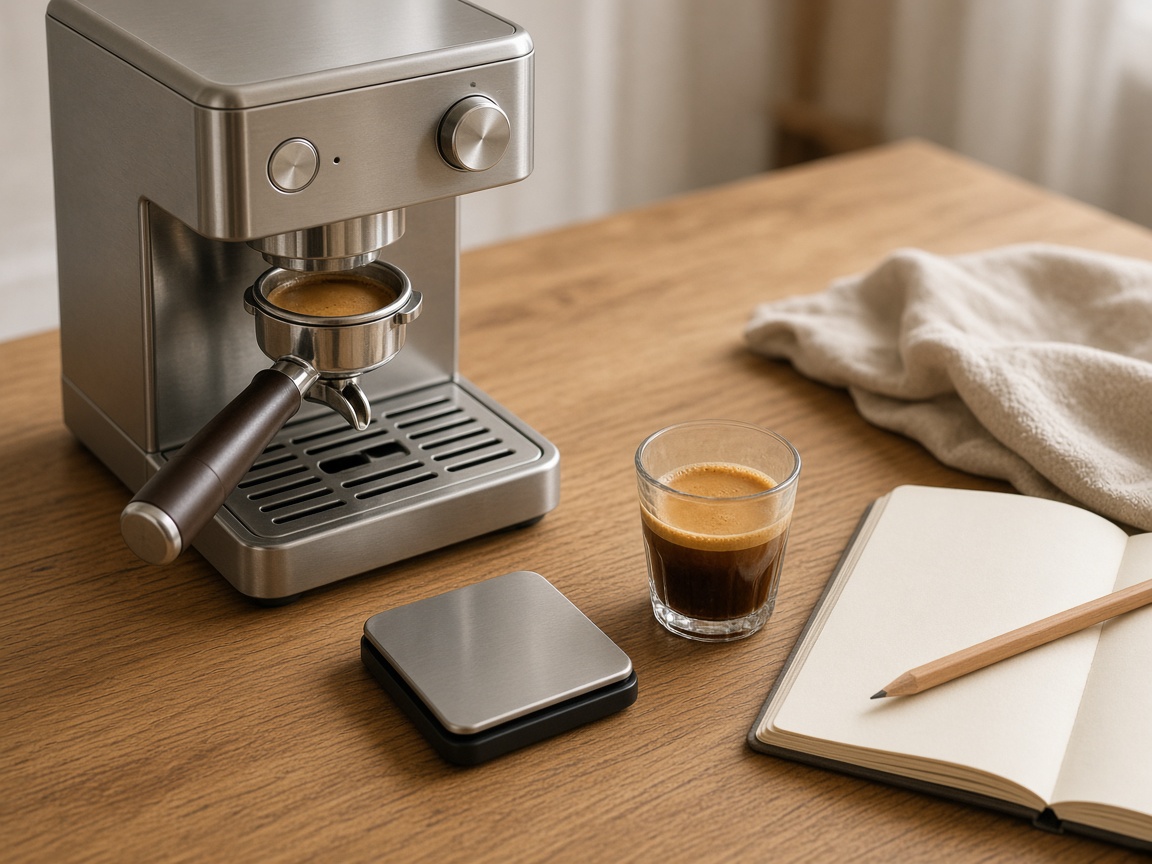
Placeholder transcript: “The wand tips just below the surface until the milk spins, then sinks to finish a glossy microfoam.” Replace this with a real caption track (.vtt) on the published video.
The shortlist
Breville Bambino Plus — best overall for beginners
About $400–$500. Breville US has listed it at $499.95, and it has dropped to $399.95 in past holiday sales.
The Bambino Plus is the machine many coffee writers suggest first. ThermoJet heating with PID is quoted as ready in about three seconds, and a low-pressure pre-infusion helps when technique is still shaky. The automatic steam wand—three temperatures, three textures—is the feature that makes milk drinks less intimidating.
- Heats quickly enough for weekday mornings
- Automatic milk texturing, with a manual mode later
- Compact footprint (11.9 × 7.4 × 14.3 in)
- No built-in grinder
- 54 mm portafilter means fewer third-party accessories than 58 mm
- Slower for a crowd of back-to-back drinks
Breville Barista Express — best with a built-in grinder
About $500–$700. Breville US list price $699.95; it was listed on sale for $499.95 in early November 2026.
If you want a single machine that grinds, doses, and brews, this is the usual starting point. The front pressure gauge is genuinely useful while you learn. It takes more counter space than the Bambino Plus, and the steam wand is manual only.
Gaggia Classic Pro E24 — best for learning the craft
About $460–$550. Gaggia North America has listed the stainless model at $549.
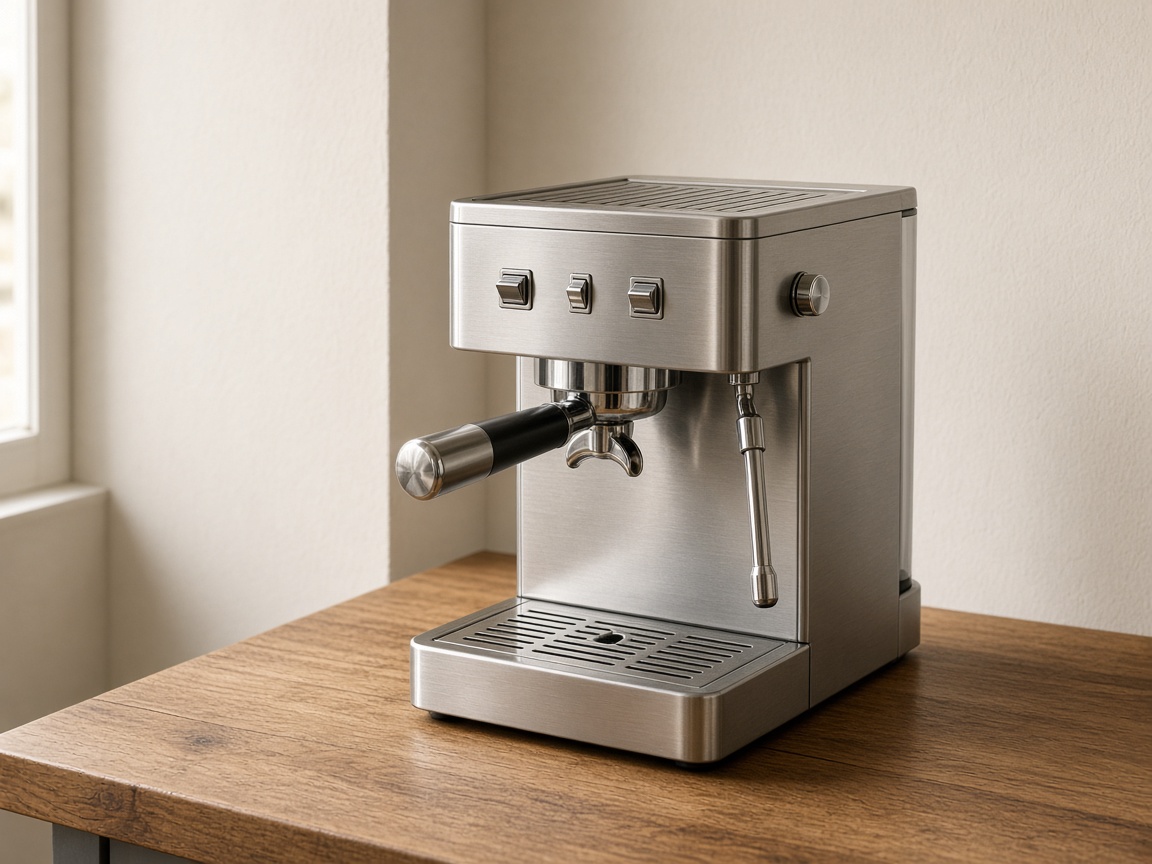
A narrower, more manual machine with a 58 mm portafilter and a commercial-style steam wand. There is no PID and no automatic milk. That is either the appeal or the frustration.
Casabrews CM5418 — best on a budget
About $140–$170.
A compact budget machine with PID, pre-infusion, and a pressure gauge. Do not treat a “20 bar” pump rating as brewing pressure—that is a maximum, not a target.
De’Longhi Stilosa — a simple entry point
A basic manual pump machine from an established brand, often around $150. Fine if you want to try espresso cheaply. The frother is easier for foamy milk than for silky microfoam. De’Longhi also shows up often in “best De’Longhi espresso machine for beginners” searches; for now we answer that here rather than building a separate brand vertical.
Breville Barista Pro — an upgrade if you already know you will stay with this
Think of it as a faster Barista Express: ThermoJet heating, a 30-setting grinder, and a display that shows shot time. List price is around $850. Only worth it if the extra speed and feedback matter more than saving the difference.
Built-in grinder vs a separate grinder
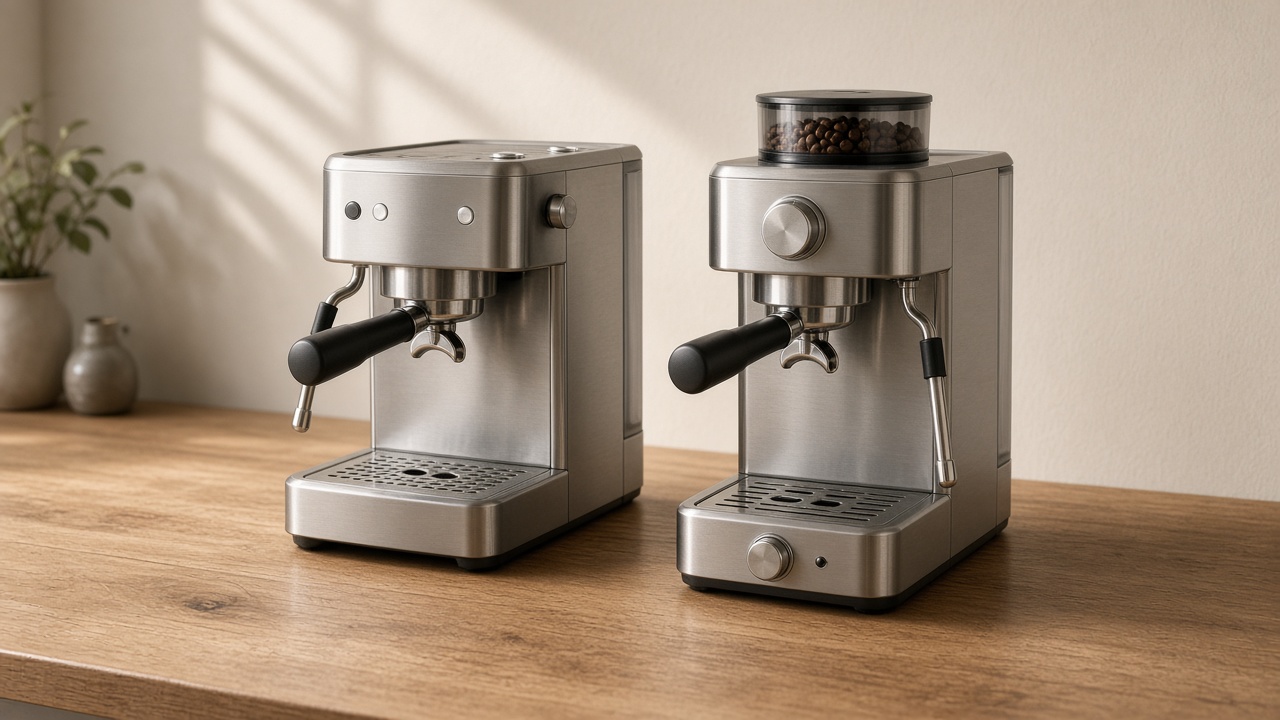
Fresh, fine, consistent grounds matter more than almost any machine feature. A built-in grinder (Barista Express, Barista Pro) is one purchase and less clutter. A separate grinder usually offers better grind quality per dollar, but it adds cost and space. Those questions will get their own pages later; for now this section is the answer.
Semi-automatic vs super-automatic vs capsule
Most of the machines in this guide are semi-automatic: you grind, tamp, and start the shot, and the machine handles pressure and water. Super-automatic machines and capsule systems (including Nespresso) trade control for convenience. Choose a route before you lock a model.
What you will actually spend
The sticker price is not the full cost. Add a grinder if the machine does not include one, plus a scale, a decent tamper if the bundled one is plastic, a milk pitcher, and descaling supplies.
A basic machine such as the Stilosa or Casabrews. Plan on a pressurized basket if you do not buy a grinder yet.
An all-in-one like the Barista Express, or a Bambino Plus plus a separate grinder.
The Barista Pro, if you already know you want speed, a display, and a built-in grinder.
How to choose, and a starter setup
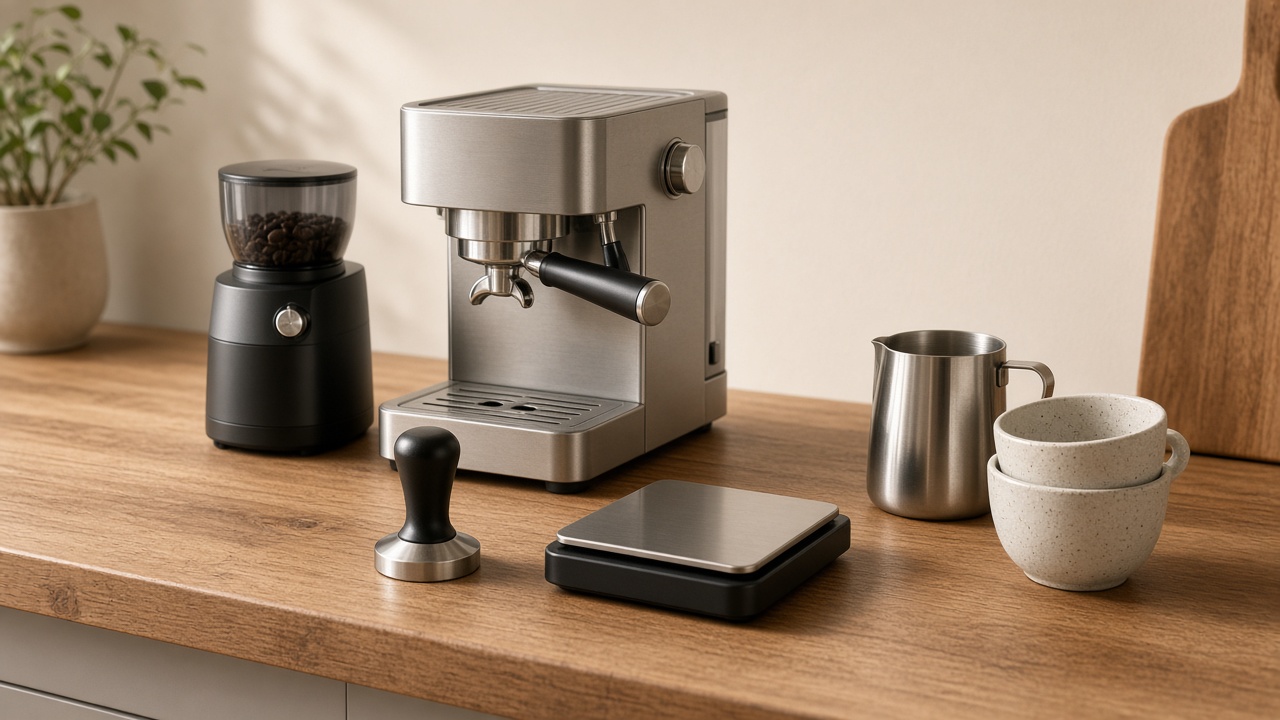
- Most beginners, especially latte drinkers: Bambino Plus, plus a separate grinder.
- One-box setup: Barista Express.
- Tight budget or a very small counter: Casabrews CM5418.
- You want to learn on café-size parts: Gaggia Classic Pro E24.
Bambino Plus vs Barista Express
These two are the fork many first-time buyers actually reach. The Bambino Plus is smaller, faster to heat, and easier with milk; you will buy a grinder. The Barista Express is the complete kit in one footprint, with a useful pressure gauge and a manual wand. That matchup will get its own page later; this is the short version.
Beginner questions
These answers stay on the page for readers. We are not marking them up as FAQPage rich results, which Google stopped showing in Search on May 7, 2026.
Do I need a separate grinder?
Unless the machine has one built in, yes, ideally. Espresso needs a fine, consistent grind. A pressurized basket and pre-ground coffee can get you started, with a lower flavor ceiling.
Is a 20-bar machine better than a 15-bar one?
No. Those numbers are usually the pump’s maximum, not the brew pressure you want. Most good shots aim for about 9 bar at the puck.
How much should a beginner spend?
You can start around $150. For a setup most people will not outgrow quickly, plan on roughly $500 to $700 total.